


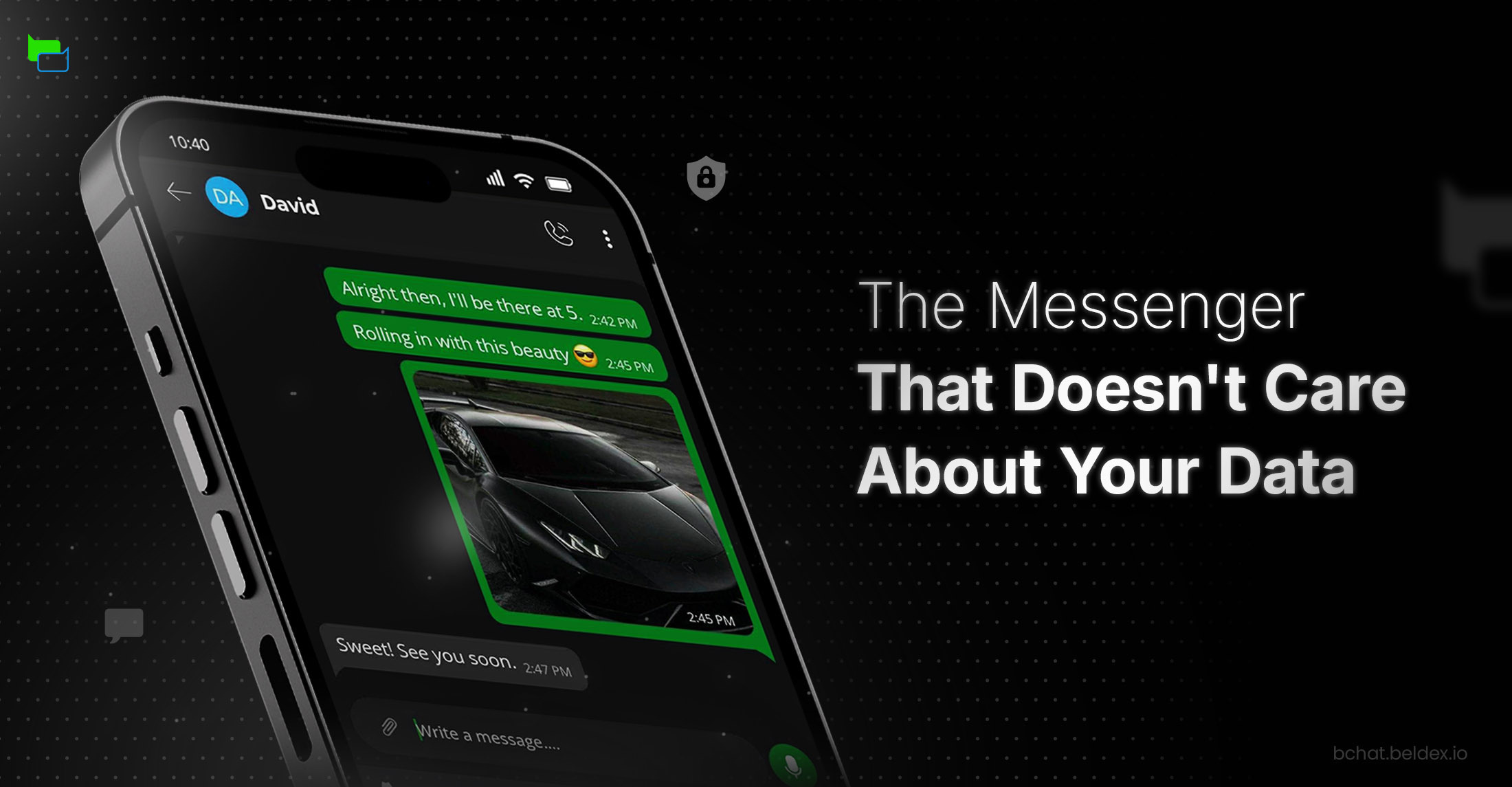
Today’s data economy is built on ad revenue. Ads have become an indispensable part of Web2, so much so that Web2 cannot survive without it. Applications like WhatsApp have begun rolling out an advertising feature for showing ads. Yes, you’re going to be bombarded with “personalized” ads in WhatsApp, after Instagram and Facebook. And how do they know what ads are relevant to your interests? Because they know you better than you know yourself. They monitor your every message, every click, and every tap.
WhatsApp, once a simple encrypted messaging app, is now becoming a popular advertising platform. The Internet is also filled with ads and promotional content that clutter it. Ads prevent users from focusing on the content they want to read, watch and listen to. It has become extremely difficult to surf the internet for five minutes straight without witnessing plethora of ads.
Data is being harvested at an alarming rate. Because better data means better-targeted ads and more ad revenue. It’s a vicious cycle. Big tech and companies producing consumer products are ready to pay millions to get their ads featured on centralized platforms. Meta has generated nearly $196 million in USD from the ad revenue in the fourth quarter of 2025.
This breach of trust and privacy will eventually lead more and more users to privacy-first applications, applications that collect no data. Privacy messaging apps and other platforms that don’t collect data or show ads will be the save haven of the future.
But let’s first ponder upon the following questions.
How Does WhatsApp Show Ads When it Claims to Have End-to-End Encryption?
WhatsApp claims to offer end-to-end encryption but still shows targeted ads. *Rolls eyes*
How’s that possible?
Simply put, end-to-end encryption protects message content, but not the user behaviour.
Many tech companies, including Meta, rely on metadata, behavioural tracking, and cross-platform profiling to understand who users are and what they’re interested in, without having to read encrypted conversations.
Not sure what metadata is? Learn all about it here.
Instagram has also reportedly removed end-to-end encryption on its platform. Your DMs are no longer protected. And the last time we checked, both WhatsApp and Instagram are run by the same company, Meta.
Several other platforms also resort to unorthodox and roundabout methods to collect data to map user behaviour with their ad content.
This is essentially deanonymizing users, a process of re-identifying individuals from supposedly anonymous or encrypted data. Apps collect your behavioural data and then correlate it with datasets from other sources to solve the puzzle of who you really are.
Your messages may be encrypted, but your identity and activity patterns are not.
E2EE does not equal complete privacy.
Browser-to-App Exploits: How Tracking Pixels Link Your Identity Across Apps
One of the fundamental security principles that exists in the web as well as mobile systems is 'sandboxing.'
A sandbox on a mobile or web environment allows you to run everything without any interaction between different elements running on it, for example, between a mobile browser and an installed app on the mobile.
However, the Meta pixel and Yandex Metrica, which use tracking codes embedded in millions of websites, de-anonymize visitors by circumventing legitimate internet protocols. These codes cause Chrome and other centralized browsers to surreptitiously send unique identifiers to each visitor's native apps installed on their mobile devices, bypassing core security and privacy protections.
From there, the platform links multiple innocuous data like zip code, email ID, date of birth, gender, etc.
How to Ensure Your Privacy While Messaging?
The reality is that most centralized messaging apps tied to an ad-revenue model try to deanonymize their users and collect metadata, even though they claim to be an “end-to-end encrypted messaging service.”
Every click or interaction on these platforms can be used to build a digital dossier about you.
What’s disconcerting is that this happens without the user’s knowledge. If you’re someone who’s really concerned about your privacy, then consider exploring decentralized privacy-preserving alternatives that don’t collect user data.
BChat, the privacy messaging app built over the Beldex network, protect’s user privacy right from installation to sign-up and beyond.
BChat doesn’t require your phone number or email address, does not track your activities, does not depend on ad revenue, and doesn't collect metadata surreptitiously. When you create an account on BChat, you’re given a cryptographically generated ID, which you can use to privately connect with your friends and family.
Why is BChat a Privacy-First Messaging Alternative?
User data has become the primary commodity, where centralized messaging platforms rely on advertising revenues. But BChat approaches messaging from a completely different perspective. It is designed to offer complete privacy, true privacy, which is often misunderstood in mainstream messaging apps.
BChat is designed to protect privacy at every layer of communication. From application to network to user data handling and storage.
The platform removes the common tracking mechanisms used by centralized messaging apps and ensures that users remain anonymous.
Since BChat removes the requirement of a phone number and communications occur via randomly assigned BChat IDs, it eliminates the need for personal identifiers that can be linked back to the real users.
Why is this important? A recent incident on the Signal messaging app involved a targeted phishing attack that resulted in the takeover of some accounts belonging to some of its high-profile users.
While BChat itself uses the signal protocol, incidents like this highlight that phishing is still an attack vector on platforms that use centralized recovery, SMS codes, or PIN numbers without distributed decentralization.
Privacy by Design, Not by Policy
As online advertisement culture has become so aggressive, the line between communication platforms and data collection systems has begun to disappear. A platform that once declared it would never show ads thirteen years ago has rolled out an online ad feature as a result of changing core teams and policies. In contrast, BChat’s privacy features are embedded in open-source code and remain immutable, protected from any changes in teams or policies.
Join our community to know more about our recent developments.
 back to blog